
WordPress powers more than 40% of websites on the internet, making it one of the most popular content management systems (CMS) in the world. Whether you’re building a personal blog, a business website, or a custom web application, understanding WordPress development can open the door to countless opportunities.
What is WordPress Development?
WordPress development involves creating, customizing, and maintaining websites using the WordPress platform. Developers work with themes, plugins, and core WordPress functionality to build websites tailored to specific business needs.
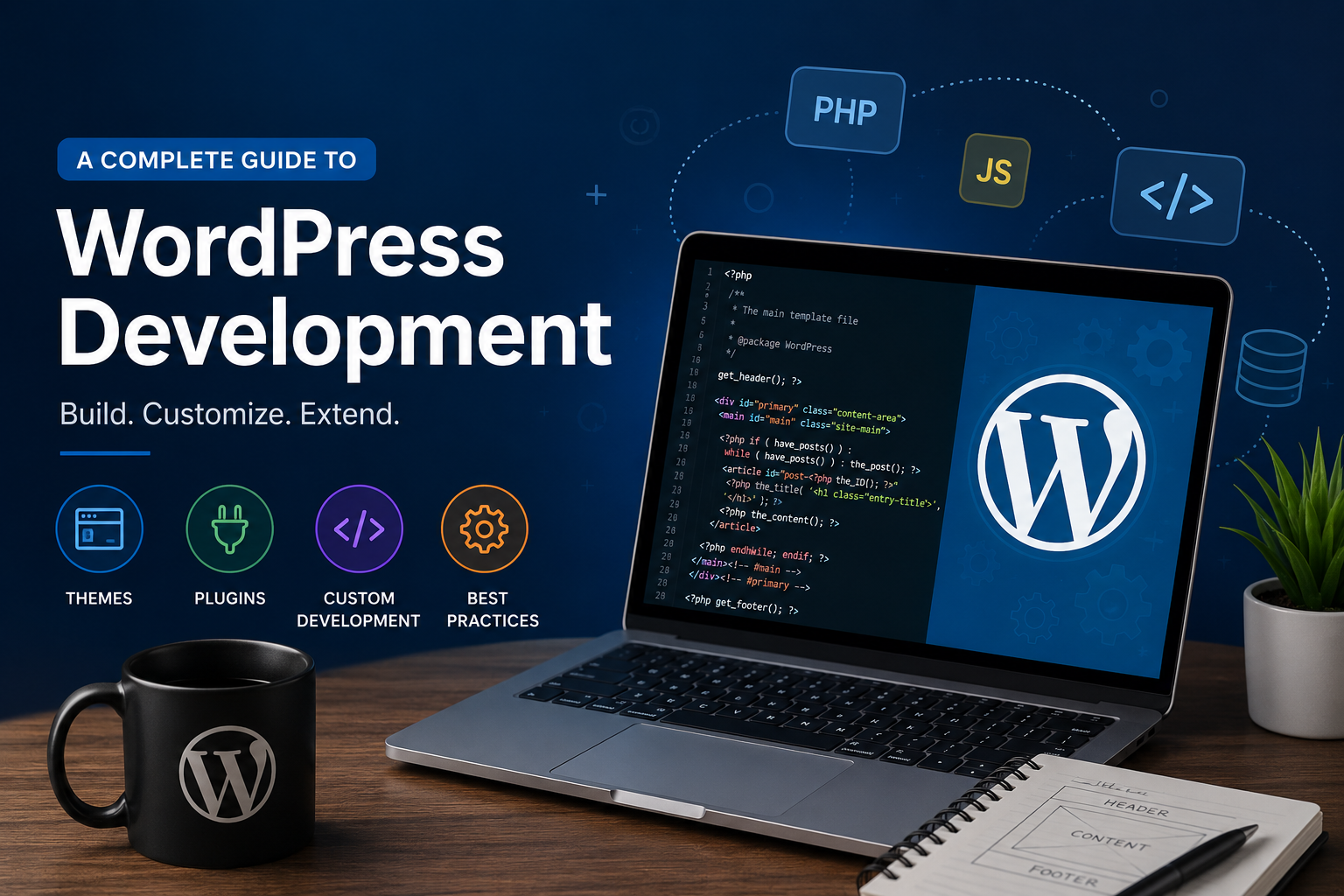
There are three primary areas of WordPress development:
- Theme Development: Designing and building the visual appearance of a website.
- Plugin Development: Extending WordPress functionality with custom features.
- Custom Development: Creating unique solutions using WordPress APIs and coding standards.
Why Choose WordPress?
Businesses and developers continue to choose WordPress because of its flexibility and ease of use. Some key benefits include:
- User-friendly content management interface
- Thousands of themes and plugins available
- SEO-friendly architecture
- Strong community support
- Scalable solutions for businesses of all sizes
- Open-source and cost-effective
Essential Skills for WordPress Developers
To become a successful WordPress developer, it helps to have knowledge of:
- HTML & CSS: For structuring and styling web pages.
- JavaScript: To create interactive user experiences.
- PHP: The core programming language behind WordPress.
- MySQL: For managing and querying databases.
- Git: For version control and collaboration.
Understanding Themes and Plugins
Theme Development
Themes control how your website looks and feels. Custom theme development allows businesses to create a unique online presence that aligns with their brand identity.
Benefits of custom themes include:
- Faster performance
- Better security
- Tailored design
- Improved maintainability
Plugin Development
Plugins add functionality to WordPress websites. Examples include contact forms, booking systems, payment gateways, and membership features.
Custom plugin development ensures that your website only includes the features you need without unnecessary bloat.
Best Practices for WordPress Development
To build secure and high-performing websites, developers should follow these best practices:
- Keep WordPress core, themes, and plugins updated.
- Use child themes for modifications.
- Follow WordPress coding standards.
- Sanitize and validate user input.
- Optimize images and database performance.
- Implement regular backups.
- Test thoroughly before deployment.
The Future of WordPress Development
With the rise of the Gutenberg block editor, headless WordPress architectures, and REST API integrations, WordPress development continues to evolve. Developers who stay updated with emerging technologies can create faster, more dynamic, and feature-rich digital experiences.
Final Thoughts
WordPress remains a powerful platform for businesses and developers alike. From simple blogs to enterprise-level applications, its flexibility and extensive ecosystem make it an excellent choice for web development projects.
If you’re planning to build a professional website or enhance your existing WordPress platform, investing in quality WordPress development can help you achieve long-term success.
Need expert WordPress development services? Contact our team today to create secure, scalable, and high-performing WordPress solutions tailored to your business goals.